Introduction
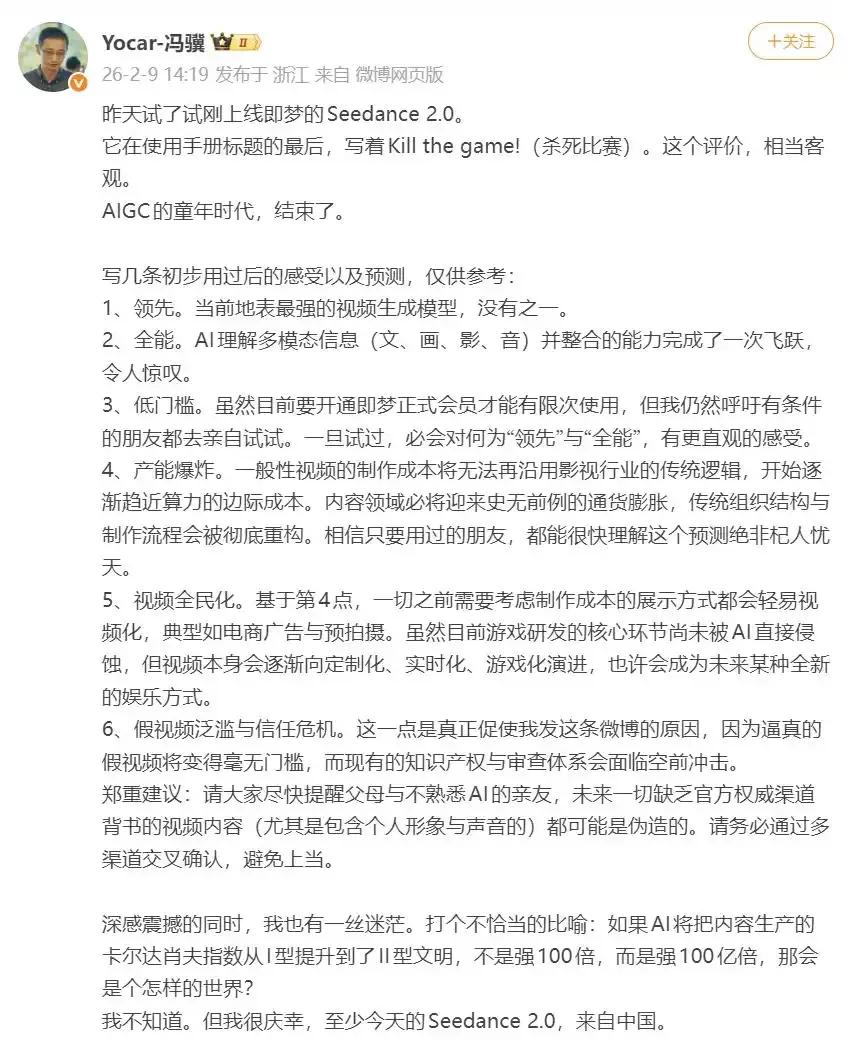
The birth of Seedance 2.0 has redefined the boundaries of AI video creation. This tool liberates video production from cumbersome technical processes with three major breakthroughs: maintaining character consistency, intelligent multi-shot planning, and multi-modal material analysis. It not only addresses industry pain points such as character drift and physical distortion but also empowers creators with a ‘director-style’ control interface, marking the transition of AI video from a toy era to a productivity era.

In today’s film, short drama, and comic drama markets, technological changes are driving industry development at an unprecedented pace. The emergence of Seedance 2.0 is like a bombshell, completely breaking the original pattern of AI video creation and bringing new opportunities and challenges to the industry.
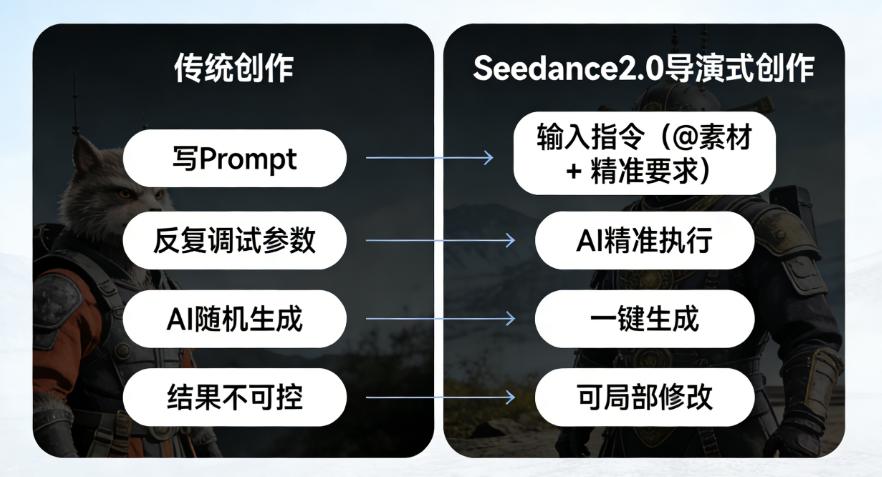
Before the advent of Seedance 2.0, AI video creation faced numerous difficulties. Creators often felt like blind people groping in the dark, spending a lot of time and effort adjusting parameters and modifying prompts, yet often failing to achieve satisfactory results. Issues like character drift, physical distortion, and uncontrollable creativity loomed like insurmountable barriers, deterring many creators.
This reflects the reality of traditional AI short drama production—cumbersome, inefficient, and full of uncertainty. Most of the creators’ energy was consumed in technical implementation and process management, leaving little time for the creative process itself.
Everything changed with the arrival of Seedance 2.0. It is like an automatic reaper that suddenly makes traditional manual labor obsolete. The words of Feng Ji, producer of “Black Myth: Wukong,” proclaiming “Welcome to the youth era of AIGC,” signal the transition of AI video creation from the ’toy era’ to the ‘production era.’
Core Features of Seedance 2.0
The core advantage of Seedance 2.0 lies in its ability to solve three major pain points in AI video creation: character drift, physical distortion, and uncontrollable creativity.
Previously, generating videos with AI often resulted in awkward situations where the character’s appearance changed from shot to shot, commonly referred to as ‘character collapse’ or ‘face-swapping awkwardness.’ Seedance 2.0 can achieve pixel-level locking of character facial features and clothing texture styles, ensuring high consistency in appearance, clothing, and even subtle expressions across different shots.
It can also automatically plan multi-shot sequences like a professional director, effortlessly executing professional camera movements such as push, pull, tilt, and pan, even accurately reproducing the true structure of buildings by ’turning to the back of the building.’ This modeling ability in three-dimensional space surpasses previous AI tools.
Most impressively, Seedance 2.0 supports input in four formats: text, images, video, and audio, capable of analyzing up to 12 reference materials. You can use the ‘@’ symbol to reference uploaded images, videos, or audio materials, clearly specifying their roles in the generated video. For example, you can say, “Make the girl in @Image 1 appear in the scene of @Image 2, completely replicating the camera movement and protagonist’s expression from @Video 1, with background music following the rhythm of @Audio 1.” This ‘what you see is what you get’ approach fundamentally changes the rules of the game in AI video creation.
Experience and Adaptation
The experiential advantage of Seedance 2.0 is that it productizes the director’s control intentions. Previous AI video generation resembled a ‘gacha’ creation process, where you could not precisely instruct the AI, saying, “I need a push-pull shot from below,” but instead had to repeatedly use vague terms like ‘cinematic, dolly shot’ in prompts and hope the model would guess your intentions correctly.
Seedance 2.0 acts like an assistant that understands creation and directing. It can comprehend users’ implicit needs and even understand scripts. You can direct AI creation in a more intuitive and precise way. For instance, you can say, “@Image 1 is the first frame, referencing @Video 1’s fighting actions,” or “extend @Video 1 by 5 seconds.”
It can also natively generate synchronized audio-visual content, aligning lip movements, emotions, background music, and environmental sound effects with millisecond precision, eliminating much of the tedious work involved in post-production voiceovers and audio-visual synthesis, raising the usability of videos from the industry average of less than 20% to over 90%.
Multi-Dimensional Changes Across Industries
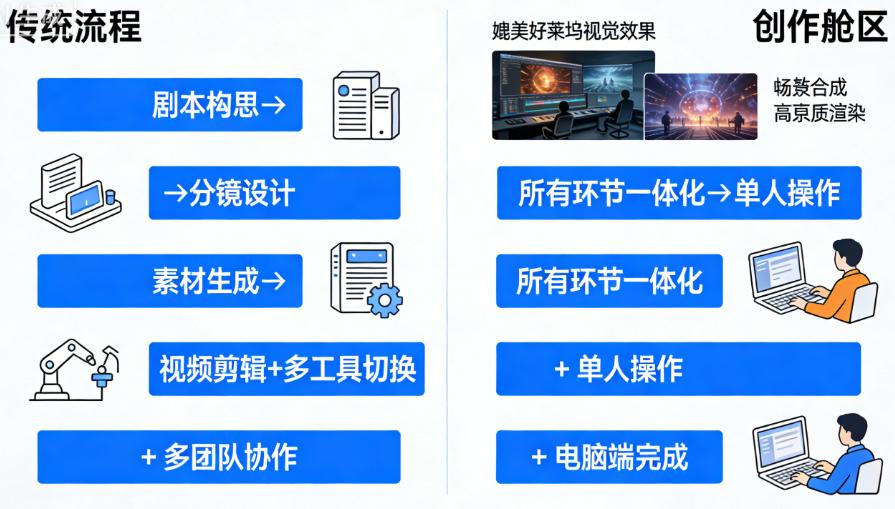
In traditional AI short drama production processes, creators had to switch between different tools and platforms like craftsmen, manually stitching and adjusting every step. Seedance 2.0 acts like an integrated creative pod, merging script conception, storyboard design, material generation, and video editing into one seamless process.
Previously, a quality AI short drama required a complex and cumbersome workflow involving directors, screenwriters, assistant directors, and animators. Now, a creative individual can use tools like Seedance 2.0 to create visuals comparable to Hollywood blockbusters right from their computer.
This not only significantly lowers the barriers to creation but also allows creators to focus more on the creative process without being bogged down by tedious technical details.
The emergence of Seedance 2.0 makes the idea of ’everyone being a comic drama creator’ a reality. Previously, turning a personal story into a comic drama required professional skills and high costs. Now, you can bring your ideas to life at a very low cost.
After integrating Seedance 2.0, Chinese online platform realized a ‘one-click novel to short drama’ function, launching 10 AI short dramas during the 2026 Spring Festival, with a total view count exceeding 500 million. This success is attributed to Seedance 2.0’s cost advantages, enabling small and medium creators and independent studios to realize their creative visions.
The industry ecosystem is gradually shifting from a ‘head monopoly’ to a ‘hundred flowers blooming’ model, with more unique content emerging in the public eye.
Commercial Monetization: From Single Model to Diverse Ecosystem
Currently, the commercial monetization of AI comic dramas remains relatively singular, primarily focused on advertising revenue sharing, membership fees, and platform subsidies. However, with the widespread adoption of Seedance 2.0, the future of AI comic drama monetization is expected to become increasingly diversified.
Cross-industry integration models such as ‘AI comic drama + e-commerce,’ ‘AI comic drama + gaming,’ and ‘AI comic drama + cultural tourism’ will gradually become mainstream. For instance, popular characters in comic dramas could become e-commerce influencers, promoting related products; classic scenes from comic dramas could collaborate with cultural tourism spots to create immersive experiences; and storylines could be adapted into mini-games to achieve traffic interconnectivity.
The development of derivative products will also become an important profit growth point—merchandise based on comic drama characters, virtual idols, and cultural products can further tap into the long-tail value of IP, maximizing its commercial potential.
Comparison of Seedance 2.0 with Previous Generations and Competitors
The most significant difference between Seedance 2.0 and previous products is its transformation of AI video from a ‘gimmicky toy’ into a ‘production tool.’
Earlier AI video generation felt more like an amusing toy, capable of producing stunning and imaginative clips, but when attempting to use it as a reliable productivity tool, its unstable quality, uncontrollable processes, and ignorance of the physical world deterred professional video creators.
Seedance 2.0 addresses these pain points, generating high-quality videos consistently, maintaining character consistency across 10 shots, allowing for repeated use of the same scene, and enabling modification of a single shot without starting over.
Before Seedance 2.0, competitors like Kuaishou Kling, OpenAI Sora, and Google Veo led the market with their strengths in character realism, motion control, and physical realism, respectively.
The emergence of Seedance 2.0 has reshaped the competitive landscape of AI video. It no longer competes on single model metrics but rather on ‘director workflows.’ It productizes the director’s control intentions, allowing creators to direct AI creation in a more intuitive and precise manner.
As Feng Ji stated, Seedance 2.0 has objectively achieved the goal of ‘killing the competition’ by redefining the standards of AI video generation.
Challenges and Controversies Brought by Seedance 2.0
While Seedance 2.0 solves many traditional AI video generation pain points, it also faces some technical challenges. For example, how to further enhance the resolution and duration of generated videos, how to better handle complex scenes and character interactions, and how to enable AI to better understand and simulate physical laws. These challenges require continuous technological innovation and optimization to make AI video generation more mature and reliable.
The emergence of Seedance 2.0 has also sparked ethical controversies. For instance, as generating hyper-realistic videos becomes barrier-free, the proliferation of false information and the collapse of trust systems become serious issues.
Any video content not backed by official authoritative channels, especially those containing personal images and voices, could be fabricated. What we see will no longer be real. This poses significant challenges to existing intellectual property and review systems and may trigger profound social trust crises.
Currently, Seedance 2.0 does not support using real human faces as reference for generation, primarily to avoid portrait rights and privacy risks. This serves as a reminder that while enjoying the conveniences brought by technology, we must also be vigilant about the potential risks it may pose.
Industry Impact: From Collaboration to Replacement
The emergence of Seedance 2.0 has had a tremendous impact on the traditional film and television industry. Tasks that once required a team to collaborate can now be accomplished by one or two people using a single tool, causing anxiety among many industry professionals.
However, it is essential to recognize that Seedance 2.0 is not aimed at replacing human creators but rather liberating them. It frees creators from tedious technical tasks, allowing them to focus on what they do best: refining ideas and crafting stories.
Future Outlook for Seedance 2.0
In the future, Seedance 2.0 will continue to iterate and optimize. For instance, it may support longer video generation, higher resolution quality, more complex scenes and character interactions, and more precise physical simulations.
As technology continues to advance, the quality of AI video generation will improve, controllability will increase, and the barriers to creation will decrease.
The emergence of Seedance 2.0 will drive the integration of AI video with more industries. For example, in education, it can be used to create engaging teaching videos; in advertising, it can produce personalized ad content; in gaming, it can create realistic game animations.
This integration will bring new opportunities and challenges to various industries and create more commercial value.
In the future, the ecosystem of AI video creation will gradually be restructured. Traditional film production companies and advertising agencies will no longer compete on ‘production capability’ but rather on ‘creative capability’ and ‘planning capability.’ Those intermediary links relying on information asymmetry and resource barriers will be ruthlessly crushed by AI.
Tools like Seedance 2.0 will become the ‘digital production team’ for creators, helping them efficiently realize their creative visions.
Conclusion
The emergence of Seedance 2.0 is undoubtedly a ‘singularity’ in the AI comic drama industry—it uses tangible technological breakthroughs to solve long-standing core pain points in the industry, pushing it from ‘inefficient and high consumption’ to ’efficient and inclusive,’ breaking through from a ’niche track’ to a ‘hundred billion market,’ and giving the entire industry new hope.
However, technology is ultimately just a tool; it can empower us but cannot replace our creativity. The core competitiveness of AI comic drama will always be creativity and content.
For creators, Seedance 2.0 presents both opportunities and challenges. The opportunity lies in its lowering of the creative barrier, allowing more ideas to come to fruition; the challenge is that as everyone gains access to the same efficient tools, the gaps in creativity and aesthetics will become increasingly pronounced.
In the future, with the continuous iteration of AI tools like Seedance 2.0, the ongoing improvement of industry standards, and the addition of more creative and empathetic creators, I believe AI comic drama will eventually shed its label as an ‘appendage of AI technology’ and become an independent, mainstream content form, sharing the stage with traditional animation and short dramas, and even becoming a new growth engine for the content industry.
After all, technology is a tool, and content is the ultimate answer.
Comments
Discussion is powered by Giscus (GitHub Discussions). Add
repo,repoID,category, andcategoryIDunder[params.comments.giscus]inhugo.tomlusing the values from the Giscus setup tool.